





Call Now for 24/7 Emergency Rodent Service
Brown rat at the base of a stucco wall, a typical Mission Viejo exterior entry point

Local crew serving Mission Viejo since 2011

Rodent Control Mission Viejo, CA

Inspection · Removal · Exclusion · Cleanup

We inspect free, quote flat-rate in writing, trap until activity reads zero, then seal every opening we photographed — 3,400+ rodent jobs across Mission Viejo attics, rooflines, garages, and crawlspaces since 2011.

  • Free inspection and flat-rate written quote
  • 2-year written warranty on sealed openings
  • Our own technicians, never subcontractors

Calls answered 24/7Free inspectionNo obligation

  • Licensed & Insured Trained local technicians
  • Same-Day Service Most calls seen within 24 hours
  • Written Warranty Written exclusion warranty
  • Free Inspection No charge, no obligation
Years working local homes
15+ Years working local homes Trading since 2011
Rodent jobs completed
3,400+ Rodent jobs completed Mission Viejo and Orange County
Exclusion warranty
2-Year Exclusion warranty Written, on every sealed gap
Employed technicians
6 Employed technicians No subcontracted crews

Full rodent service

Complete Rodent Control for Mission Viejo Homes & Businesses

Rodent control is four jobs, not one: inspection, removal, exclusion, and cleanup. One crew handles all four for single-family tract homes, HOA condos, rental properties, and commercial kitchens across Mission Viejo.

Traps take out the animals already inside. Traps do not close the building. On a typical Mission Viejo home built between 1966 and the mid-1990s we find three to seven usable openings — a torn aluminium gable-vent screen, a lifted S-tile at a roof-to-wall junction, a hardened garage-door bottom seal, or an unsealed stucco penetration behind an irrigation valve. Those get sealed with hardware cloth, sheet metal, mortar, or copper mesh, not expanding foam.

Start with rat control for roof rats or Norway rats, mouse control for indoor house mice, or rodent exclusion when the main need is sealing entry points.

  • Free inspection covering attic, roofline, garage, crawlspace, subarea, and the full exterior perimeter
  • Rat control or mouse control chosen after the species is confirmed, not before
  • Trapping on mapped travel routes, serviced every 3 to 5 days until counts read zero
  • Rodent exclusion for vent, pipe, roof-to-wall, garage, soffit, and foundation gaps
  • Entry repairs in 1/4-inch galvanised hardware cloth, 26-gauge sheet metal, mortar, and copper mesh
  • HEPA cleanup of droppings, nests, odour, and contaminated attic insulation
(949) 555-0142
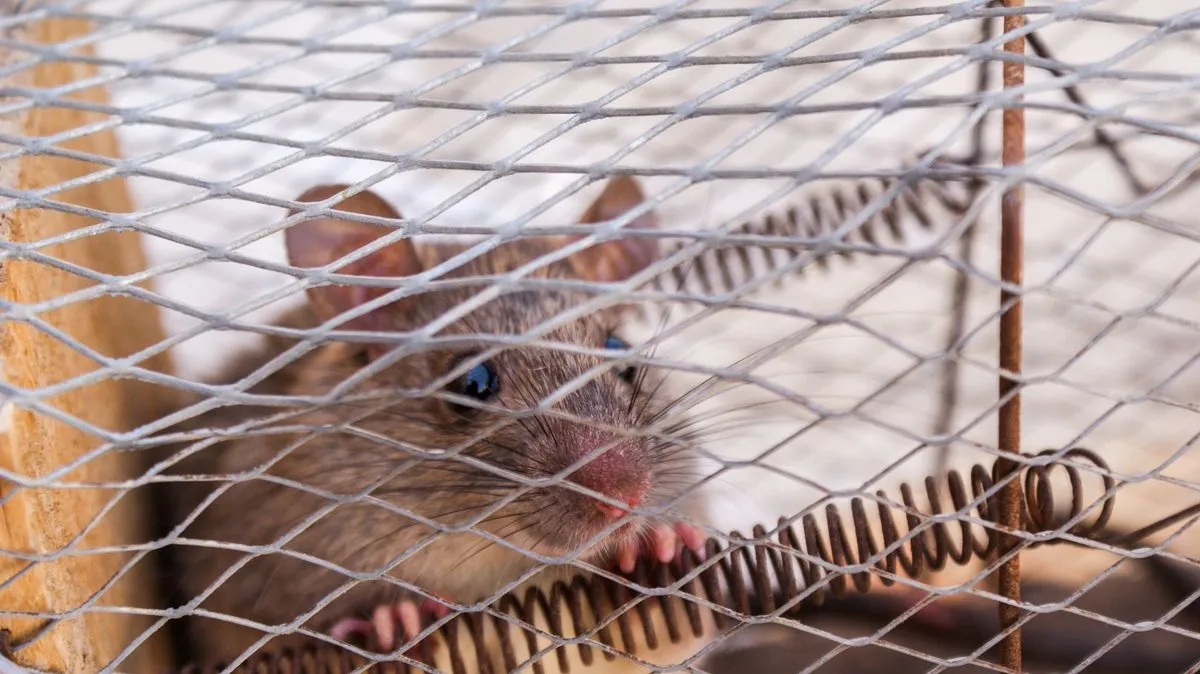
Live-catch trap holding a rat after an attic trapping visit

How we work

Insured, Documented, and Accountable on Every Job

Anyone can say "licensed and insured". What matters on the day is who turns up, what they write down, and what happens if a rodent comes back. Here is how we handle all three — and how to check any rodent company before you book one.

Check any company on the California Structural Pest Control Board register
  • PCOC member, Orange County chapter
  • NPMA member
  • Accredited, A+ rating
  • QualityPro certified company
  • Insured, certificates on request

    $2,000,000 general liability, $12,500 surety bond, and workers compensation on every employee. Certificates are emailed with the quote whenever you ask, in the format HOA boards and property managers need for their files.

  • Our own crew, no subcontractors

    All 6 technicians are our employees, background-checked and uniformed. The person who inspects your roofline is the person who seals it, and the same person runs the follow-up visits.

  • Every finding photographed

    You get the inspection photo set whether or not you book, and a second set after the sealing work. Nothing is described to you that you cannot see for yourself.

  • Industry memberships

    Pest Control Operators of California · National Pest Management Association · Better Business Bureau · QualityPro. Membership records are public and current.

Our services

Choose the Service That Fits Your Rodent Problem

Start with rat control, mouse control, or rodent exclusion. Every route begins with the same free inspection and the same written flat-rate plan.

Local rodent service in Mission Viejo

Rodents in Your Mission Viejo Home? Call Now for Same-Day Service

Tell us where you hear the noise or find the droppings. Three or four questions on the phone usually tells us the species and the likely entry, before a truck ever leaves.

Warning signs

Signs You Need Rodent Control in Mission Viejo

Four signs decide whether you have a live infestation or an old one. Fresh droppings, activity after dark, new gnaw marks, and odour tell a technician where the animals travel and how long they have been there.

Rat on open ground beside a home, close to a burrow entrance

Two or more of these? Call (949) 555-0142

  1. 01

    Droppings and urine staining

    Rat droppings run about 1/2 to 3/4 inch, roughly the size of a coffee bean. Mouse droppings are 1/8 to 1/4 inch, like a grain of rice with pointed ends. Fresh droppings are dark and soft; old ones are grey, dry, and crumble under a screwdriver tip. Under UV light, urine trails glow along the top plates of a wall.

  2. 02

    Scratching in walls or overhead after dark

    Roof rats and house mice are crepuscular — heaviest movement in the first two hours after sunset and again before dawn. Light ticking inside a wall cavity usually means mice. Running, dragging, or thumping directly above a bedroom ceiling usually means roof rats moving along a truss chord.

  3. 03

    Gnaw marks on wire, wood, and irrigation

    Rodent incisors grow continuously, so they gnaw to wear them down. Rat marks are paired grooves about 1/8 inch wide; mouse marks are finer and closer together. Chewed low-voltage landscape wire, drip irrigation tubing, and pool-equipment conduit are common first finds on local properties.

  4. 04

    Nests, rub marks, and odour

    Shredded insulation, palm fibre, and paper form the nest. Dark grease smears along joists and pipe runs mark a route used for weeks. A musky ammonia smell means live animals; a heavy sweet rot means a carcass in a wall void or a soffit return.

Common entry points

Where Rodents Enter Your Mission Viejo Home

An adult roof rat passes a 1/2-inch gap. A house mouse passes 1/4 inch — about the width of a pencil. These six areas produce almost every entry we find on Mission Viejo housing stock, and five of the six are invisible from the ground.

(949) 555-0142
  • Roof-to-wall junctions

    Where a lower roof plane dies into a taller stucco wall, the tile course lifts and leaves a void behind the flashing. This is the single most common roof rat entry on local two-storey homes and it is completely hidden from the driveway.

  • Gable, turbine, and O'Hagin vents

    The aluminium insect screen fitted on 1970s and 1980s tracts corrodes, tears at the staple line, and pulls loose. Rats push straight through failed mesh. Replacement is 1/4-inch galvanised hardware cloth fastened to sound framing, not screen.

  • Garage door seals and jamb corners

    A vinyl bottom seal that has hardened in the sun leaves a channel down the middle and open triangles at both jamb corners. Those corners are the most common mouse entry we photograph, and they are a 20-minute repair.

  • Stucco and utility penetrations

    Gas, water, cable, condensate, and dryer-vent penetrations are usually foamed, never sealed. Foam is chewed through in a night. Each penetration needs mortar or a metal collar, then sealant as the weather layer.

  • Soffits, fascia, and eave returns

    Dry-rotted fascia behind a failed rain gutter and open soffit returns at a bay window give direct attic access. These need carpentry plus metal, not caulk — which is why exclusion is priced as a repair, not a treatment.

  • Foundation vents, weep screed, and burrows

    Norway rats work from the ground. Open crawlspace vents, a weep-screed gap behind a raised planter, and burrow mouths under a patio slab or spa pad all need a ground-level plan with buried hardware cloth.

Photograph the opening if you find one and call (949) 555-0142. A technician will tell you on the phone whether it is a seal, a repair, or nothing at all.

Health and property risks

Why Rodents Are a Serious Problem for Mission Viejo Homes

Three risks drive the urgency: contamination, structural and electrical damage, and a breeding curve that doubles the problem while you decide.

Pathogens, parasites, and flea-borne typhus

Rats are associated with leptospirosis, salmonellosis, and rat-bite fever; deer mice in outbuildings are the hantavirus reservoir in California. Rodents also carry the fleas behind flea-borne typhus, which the Orange County Health Care Agency tracks locally each year. Sweeping dry droppings aerosolises the risk, which is why cleanup is done with a HEPA vacuum and not a broom.


Wiring, ducting, and fire risk

Rodents strip insulation from Romex, HVAC low-voltage runs, and solar DC conductors, and they open flex duct and condensate lines. Bare conductor in a Mission Viejo attic is an electrical hazard, not a pest problem — we photograph it and tell you to get a licensed electrician on it before we seal the space.

A breeding curve that outruns you

A house mouse reaches breeding age at six weeks and can raise five to ten litters a year. Mission Viejo's Mediterranean climate never forces a winter die-off, so fruit trees, dense ivy, and year-round irrigation keep a colony fed through every season. Two weeks of waiting is measurable in the trap count.

Rodent identification

Common Rodents We Deal With in Mission Viejo

Three species account for nearly every call we run here. Identification is not trivia — it decides trap type, trap height, bait choice, and which half of the building gets sealed first.

  • Roof rat (Rattus rattus) on a fence rail beside a tiled roofline

    Roof Rat (Rattus rattus)

    The species behind most attic calls in Mission Viejo. Slim, 5 to 9 ounces, with a tail longer than its body. It is an excellent climber and travels the "aerial highway" — fence tops, Canary Island date palms, unpruned citrus, and bougainvillea against a wall. Nests high: attics, soffit returns, and the skirt of an untrimmed palm. Traps go on joists and top plates, not on the floor.

  • Norway rat (Rattus norvegicus) in dense ground cover near a foundation

    Norway Rat (Rattus norvegicus)

    Heavier at 11 to 16 ounces, blunt-nosed, with a tail shorter than its body. A burrower, not a climber. We find it along storm drains, creek-adjacent lots near Oso Creek, under sheds and spa pads, and in dense ground cover. Control is ground-level: burrow work, crawlspace vents, weep screed, and perimeter hardware cloth.

  • Adult house mouse (Mus musculus) beside a wall, shown for size comparison

    House Mouse (Mus musculus)

    Half an ounce to an ounce, and through a 1/4-inch gap without slowing down. It nests within about 10 to 30 feet of a food source, which puts it behind kitchen kickboards, in pantry corners, inside garage storage, and in wall voids beside a refrigerator. Mouse jobs need many traps close together, not a few traps spread wide.

How it works

Our 4-Step Rodent Control Process

The same four steps run on every Mission Viejo property, in the same order. Most homes reach zero activity in 7 to 14 days, with exclusion completed inside one to three days after that.

  1. 1 Step 1

    Step 1: Free inspection — 45 to 75 minutes

    We confirm the species, enter the attic and subarea where access allows, walk the full roofline and perimeter, and photograph every opening. You leave the visit with the photo set and a flat-rate written quote, whether or not you book.

  2. 2 Step 2

    Step 2: Trapping and removal — 7 to 14 days

    Snap traps and multi-catch devices go on mapped routes at the correct height for the species. We return every 3 to 5 days, remove catches, log counts, and keep going until two consecutive visits read zero.

  3. 3 Step 3

    Step 3: Exclusion — 1 to 3 days

    Only once the building is clear. Openings are closed with 1/4-inch galvanised hardware cloth, 26-gauge sheet metal, mortar, and copper mesh, plus the carpentry a rotted fascia or soffit actually needs. Every closure is photographed and covered by the 2-year warranty.

  4. 4 Step 4

    Step 4: Cleanup and prevention — same or next day

    HEPA removal of droppings and nesting, enzymatic treatment of contaminated surfaces, insulation replacement where it is soiled, and a written prevention list specific to your lot: which limbs to cut back, which fruit to clear, which seal to replace.

What it costs

Rodent Control Prices in Mission Viejo

Most companies will not publish a number. Here are the bands our Mission Viejo quotes actually land in, drawn from jobs we closed in the last twelve months. The inspection is free and the quote is flat-rate, so the figure you approve is the figure you pay.

Price moves on four things: how many entry points the building has, whether the rodents are in the attic or at ground level, roof access and pitch, and whether insulation has to be removed and replaced.

(949) 555-0142
Rodent Control Prices in Mission Viejo
Job type Typical price Typical time on site
Free inspection and written quote No charge 45 to 75 minutes
House mouse job, kitchen or garage $325 to $650 2 to 3 visits over 7 to 10 days
Roof rat job, attic trapping only $450 to $900 3 to 4 visits over 10 to 14 days
Full exclusion, single-storey tract home $850 to $2,400 1 to 2 days
Full exclusion, two-storey or tile roof $1,600 to $3,800 2 to 3 days
Attic decontamination and insulation replacement $1,900 to $6,500 1 to 3 days
Dead rodent location and odour treatment $225 to $600 Same visit, most cases
Commercial monthly rodent programme From $145 per month Scheduled route visits

Ranges are for structures up to about 3,000 square feet inside 92691 and 92692. Larger properties, hillside crawlspaces, and detached casitas are quoted after the inspection.

Recent local work

Rodent Jobs We Ran Across Mission Viejo This Year

Addresses are withheld and homeowners are named only by initial. What is real is the finding, the fix, and how long it took — the detail that separates a crew that has been in these attics from one that has not.

  • Casta del Sol

    Nightly running above the master bedroom

    What we found
    Roof rats entering a lifted S-tile at a roof-to-wall junction, plus a torn gable-vent screen
    What we did
    11 traps on the truss chords, both openings closed in sheet metal and hardware cloth, attic HEPA cleaned

    13 days to zero, 1 day exclusion

  • Aegean Hills

    Droppings behind the kitchen kickboard

    What we found
    House mice through a 5/8-inch stucco penetration behind the irrigation valve box
    What we did
    18 snap traps within 20 feet of the nest zone, penetration mortared and collared, pantry sanitised

    9 days to zero

  • Canyon Crest

    Burrow mouths appearing beside the spa pad

    What we found
    Norway rats under the equipment slab, working in from dense ivy on the slope
    What we did
    Ivy cut back 3 feet, burrows collapsed and monitored, buried hardware cloth apron set around the pad

    16 days to zero, 2 days exclusion

  • Palmia

    Sweet rot smell in a hallway, no visible source

    What we found
    Single dead roof rat in a wall void above a soffit return
    What we did
    Located by probe, removed through a 6-inch access cut, void treated and drywall patched

    Same visit

  • Painted Trails

    Mice in the garage after a neighbour re-landscaped

    What we found
    Hardened garage bottom seal plus both open jamb corners
    What we did
    Full seal replacement, corner blocks fitted, 6 traps held for two weeks as a check

    7 days to zero

  • Pacific Hills

    HOA notice on a rental after a tenant complaint

    What we found
    Roof rats in the attic, insulation soiled across roughly 40 percent of the plane
    What we did
    Trapping, full-envelope exclusion, insulation removed and replaced to R-38, photo report issued for the HOA file

    14 days to zero, 3 days exclusion and cleanup

Four reasons local customers call us

Why Choose Our Rodent Exterminators in Mission Viejo

15+ years, 3,400+ local rodent jobs, 6 employed technicians. Our lead technician has 19 years in the field. Nobody on this crew is a subcontractor and nobody works a commission on chemical volume, which is why the plan you get is trapping and exclusion rather than a bait box and a renewal.

  • Insured and documented

    $2,000,000 general liability and $12,500 surety bond, with certificates on request. Every finding is photographed at the inspection and every closure is photographed again after the sealing work.

  • Exclusion-first, not bait-first

    Interior work is mechanical trapping and physical sealing. Rodenticide is used only outdoors, only in locked tamper-resistant stations, and only where the site justifies it — which keeps secondary risk away from pets, children, and local raptors.

  • 2-year written exclusion warranty

    Every opening we close is photographed, listed on the invoice, and warranted. If a rodent uses a covered opening inside the warranty period we come back and fix it at no charge.

  • 15+ years on this housing stock

    Mission Viejo was built out by the Mission Viejo Company from 1966 onward, so the same vent types, tile profiles, and soffit details repeat street to street. That pattern knowledge is why our inspections take 45 minutes instead of a guess.

Speak with a Mission Viejo rodent technician

Free inspection · Same-day slots when the schedule allows · Flat-rate written price

Customer reviews

What Mission Viejo Homeowners Say

Recent feedback on inspections, trapping, exclusion, cleanup, and follow-up visits across Mission Viejo.

4.9 out of 5 from recent reviews

  • Danielle Whitcomb 2 months ago

    We heard scratching above the bedroom every night. The technician checked the attic and roof, showed us the opening over the garage, and sealed it with metal. The follow-up visits were clear, and the house has stayed quiet.

  • Marcus Tran 3 months ago

    I called about mouse droppings in the kitchen. The technician found a gap behind the dishwasher, placed traps along the wall, and returned for two checks. The price matched the written quote.

  • Priya Sundaram 3 months ago

    Our restaurant needed clear rodent service records. The team provided inspection photos, service notes, and a visit schedule that worked around closing time. We did not have to stop normal service.

  • Kathleen O'Ryan 4 months ago

    A strong odor developed near our hallway closet. The technician found the source, removed the dead rat through a small access point, treated the wall space, and closed the opening neatly.

  • Devin Marchetti 5 months ago

    Rats were moving near the patio and garage. The technician walked the outside with me, pointed out the burrows and garage gaps, and explained the work before giving one flat price.

  • Alicia Bergstrom 6 months ago

    Our store-bought traps had not stopped the attic noise. The crew placed several traps on the active routes, removed the rats, and sealed the roofline after the activity ended.

Clear comparison

DIY Rodent Control vs. Professional Extermination

DIY is the right call for one mouse in an open garage when you can see and reach the entry point. Snap traps set perpendicular to the wall with the trigger against the baseboard, food moved into hard containers, and a fresh garage seal will close that out in a week.

Bring in a licensed technician when the noise is overhead, when droppings appear in more than one room, when the activity returns after you thought it stopped, or when the opening is on a roof you should not be standing on. Attic and roofline work is where the injuries and the missed entries both happen.

DIY and professional rodent control comparison
Service step Do-it-yourself approach RC Mission Viejo
Finding entry points Ground-level look; roof-to-wall junctions and subarea vents stay unseen Attic entry, full roofline walk, subarea, and perimeter — every opening photographed
Trap placement Traps set near droppings, often at the wrong height for the species Traps set on mapped routes at species-correct height and serviced every 3 to 5 days
Sealing the building Expanding foam and steel wool; chewed or pulled out within days 1/4-inch hardware cloth, 26-gauge sheet metal, mortar, copper mesh, plus the carpentry required
Cleaning contamination Sweeping dry droppings aerosolises pathogens into the living space HEPA extraction, enzymatic surface treatment, nest removal, insulation replacement
Poison risk Over-the-counter rodenticide leaves carcasses in wall voids and reaches non-target wildlife Interior work stays mechanical; exterior bait only in locked stations where justified
Long-term cost Repeat traps and repeat entries while the openings stay open One written scope, one flat rate, 2-year warranty on every sealed point

Prevention checklist

How to Prevent Rodents in Your Mission Viejo Home

Six habits remove the food, water, shelter, and access a colony needs. All six beat peppermint oil, peppermint soap, and ultrasonic plug-ins, none of which move an established Mission Viejo infestation.

  1. 01

    Cut the aerial highway

    Keep tree limbs, palm fronds, and bougainvillea at least 4 feet clear of the roof and fence line. Skirt-prune Canary Island date palms — an unpruned skirt is a roof rat nest with a roof-height on-ramp.

  2. 02

    Clear fruit, seed, and pet food nightly

    Pick up dropped citrus and avocado daily, take bird feeders down through autumn, and bring pet bowls in at dusk. Store dry goods in metal or hard plastic, not the bag they came in.

  3. 03

    Close every gap 1/4 inch or wider

    Work the pipe penetrations, cable entries, dryer vents, garage seal, and damaged trim with metal and mortar. If a pencil fits, a mouse fits. If your thumb fits, a rat fits.

  4. 04

    Re-screen vents in galvanised mesh

    Replace corroded aluminium insect screen on gable, turbine, O'Hagin, and crawlspace vents with 1/4-inch galvanised hardware cloth fastened to sound framing.

  5. 05

    Kill the outdoor water sources

    Repair leaking hose bibs and drip lines, empty plant saucers, and check the AC condensate discharge. In a dry Mediterranean summer, standing water is the strongest single draw onto a lot.

  6. 06

    Open up garages and side yards

    Get cardboard and stored goods off the floor and onto racks, and keep a clear 18-inch inspection lane along the exterior wall so a technician — or you — can actually see the base of the stucco.

Homeowners can compare these steps with the Orange County Vector Control rat guide, the Centers for Disease Control and Prevention sealing guide, and the Environmental Protection Agency bait safety guide.

Local coverage

Rodent Control Across Every Mission Viejo Neighborhood

RC Mission Viejo covers 15 Mission Viejo neighbourhoods and both local ZIP codes, 92691 and 92692 — from the Lake Mission Viejo shoreline tracts to the hillside lots above Oso Creek. Running the same city every day is how we know roof rat pressure climbs after the first Santa Ana winds and where Norway rat burrows show up along the creek corridor.

  • Casta del Sol
  • Palmia
  • Aegean Hills
  • Canyon Crest
  • Painted Trails
  • Deane Homes
  • El Dorado
  • Finisterra
  • Madrid del Lago
  • Pacific Hills
  • California Bay Colony
  • The Colony
  • Stoneridge
  • Sierra del Lago
  • Montanoso
(949) 555-0142

RC Mission Viejo

27201 Puerta Real, Suite 300, Mission Viejo, CA 92691

Monday to Friday: 7:00 AM to 7:00 PM

Direct answers

Rodent Control Mission Viejo: Frequently Asked Questions

Have another question? Call (949) 555-0142 and ask a technician directly. You do not need to book a service to ask for guidance.

A mouse job in a kitchen or garage runs $325 to $650. Roof rat trapping in an attic runs $450 to $900. Full exclusion on a single-storey tract home runs $850 to $2,400, and $1,600 to $3,800 on a two-storey or tile roof. Attic decontamination with insulation replacement runs $1,900 to $6,500. The inspection is free, and the flat-rate written quote is what you pay.

Most homes reach zero activity in 7 to 14 days. Trapping begins at the first service visit and we return every 3 to 5 days until two consecutive visits log no catches and no fresh sign. Exclusion follows and takes one to three days depending on roof type and how many openings the building has.

Ask four questions. First, ask for the company registration number and look it up on the California Structural Pest Control Board public register — it shows status and any disciplinary history, and it takes about a minute. Second, ask whether the technicians are employees or subcontracted. Third, ask for the certificate of insurance in writing rather than a verbal assurance. Fourth, ask what the warranty actually covers and get it printed on the invoice. Any company worth booking answers all four without hesitating.

Interior work is mechanical trapping and physical exclusion only — no interior rodenticide. Where exterior bait is justified it stays in locked, tamper-resistant stations anchored away from play areas, which also limits secondary exposure for neighbourhood cats, coyotes, and raptors. Keep pets and children clear of all service equipment and tell the technician about any pet that roams the side yard.

Often, for calls placed early on a weekday. Live rats in living space, a rodent in a bedroom, and dead-rodent odour get priority on the daily board. Call (949) 555-0142 for the next open slot — the schedule genuinely changes hour to hour, so we would rather tell you a real time than a marketing one.

Peppermint oil, peppermint soap, and homemade mint sprays do not move an established infestation — at best they shift animals to the next wall cavity. Ultrasonic repellers perform poorly in controlled testing and rodents habituate quickly. Store-bought snap traps do catch rodents when placed correctly, but store-bought poison tends to leave carcasses inside wall voids and creates a second, worse call. Lasting control is removal plus sealing, in that order.

Two reasons. Fruit ripens on backyard citrus and avocado, and the first Santa Ana wind events knock cover and fruit down while dropping night temperatures. Animals that spent summer in palms, ivy, and fence lines start testing the roofline for a warm, dry cavity — and any vent screen that failed over the summer is now an open door. Late September through December is our heaviest attic season.

Every opening we seal is photographed, itemised on the invoice, and warranted for 2 years. If a rodent uses a covered opening within that period we return and repair it at no charge. It does not cover a new opening created later by roof work, solar installation, storm damage, or a remodel — but if you send us the photos we will tell you honestly which category it falls into.

Written and reviewed by our field team

This page is maintained by the RC Mission Viejo technical team and reviewed by our lead technician, who has 19 years of field experience on Southern California housing stock. Pricing bands, timelines, and species notes are updated from our own Mission Viejo job records. Public-health guidance follows the Centers for Disease Control and Prevention, the Orange County Health Care Agency, and the Environmental Protection Agency.

House mouse in low light, when rodent activity in a home peaks

Free inspection · Written quote

Get Rodent Control Today in Mission Viejo

Call (949) 555-0142 or request an inspection online. A licensed technician will confirm the species, walk the roofline and perimeter with you, photograph every opening, and hand you a flat-rate written price before anyone starts work.

Call Now · (949) 555-0142